
{主关键词}
千图网
Chinese firm’s Lixun-1 ‘space tug’ eyes maiden flight in Q1 2027 after key propulsion tests_我的网站

一 |
原标题:河南一地将开展区域核酸检测筛查!关于在示范区开展区域核酸检测筛查的公告(2022年39号)根据当前疫情形势,为切断疫情隐匿传播风险,示范区新冠肺炎疫情防控指挥部研究决定,以镇、街道为单位开展一轮核酸检测筛查,现就有关事宜公告如下:一、采样时间9月14日7:00~12:00。二、检测范围 1.辖区内所有居民(包括本地常住人口、暂住人口、临时流动人口、外籍人口等)。2.24小时内做过核酸检测的人员不参与本轮核酸筛查(学生按照教育部门要求进行)。3.48小时内接种过新冠疫苗的人员以及48小时内参加过新冠疫苗接种的工作人员不进行核酸采样检测,须向社区(村)工作人员说明情况,提供证明并做好登记,满48小时后及时进行核酸检测。 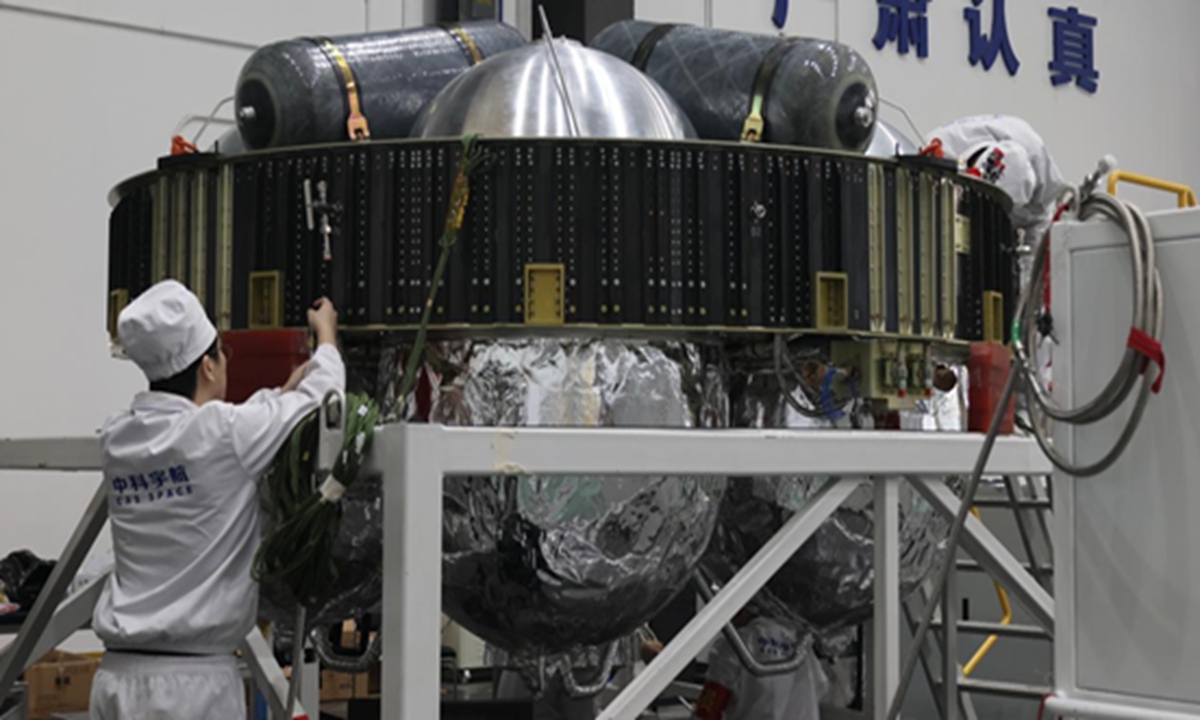
Lixun-1 upper stage, a versatile "space tug" developed by China's commercial space firm CAS Space, is scheduled to make its maiden flight in the first quarter of 2027 after completing a series of key propulsion-system tests, the developer and its chief designer told the Global Times on Tuesday.
The "tug" is designed to ferry satellites from one orbit to another and support missions ranging from constellation deployment to lunar exploration.
While the main stages of a rocket carry payloads from the ground into an initial orbit, an upper stage takes over once the craft is in space. By repeatedly restarting its engine and changing orbit, Lixun-1 can deliver satellites to higher or different orbits, distribute multiple spacecraft to separate destinations during a single launch, or send probes onto trajectories toward the moon and beyond, Global Times learned from the developer.
Yang Haoliang, chief designer of the Lixun-1 upper stage, compared the system to a shuttle service. "If the regular stages of a launch vehicle are like a long-distance bus," - they carry the upper stage and satellites from Earth to a near-Earth parking orbit - the upper stage then takes over as a "space tug," carrying its satellite "passengers" onward to their designated orbital "stops," Yang explained.
That capability can have a direct impact on how efficiently satellites are launched and operated, Yang said. If a satellite has to climb from an initial orbit to its final destination using its own engine, the process can consume a considerable amount of onboard propellant and reduce the fuel available during its operational life. An upper stage can instead perform that orbital transfer, helping conserve satellite fuel and potentially extend its service life.
It can also make one rocket launch do more work. Instead of releasing a batch of satellites into roughly the same orbit, Lixun-1 can repeatedly ignite its engine and maneuver between deployments, sending different satellites to different altitudes and inclinations. Yang said this would help accelerate constellation deployment while improving the efficiency of individual launches.
The practical ambitions behind the system are backed by a major technical milestone reached this month. In August, Lixun-1 completed its PV-001 integrated propulsion-system coordination firing test, during which the entire system operated smoothly for 566 seconds.
Yang told the Global Times that the current Lixun-1 upper stage has a thrust of 20 kilonewtons and can achieve a specific impulse of 315 seconds, which he described as reaching an internationally leading level. The August firing covered the planned profile for the maiden mission, an important step before the system proceeds to flight testing.
The test was more than a demonstration of the engine itself. As an important system-level verification during development, it examined the coordination and engineering reliability of the engine pressurization system, propellant delivery system, propellant management system and servo-control system under the fully integrated configuration.
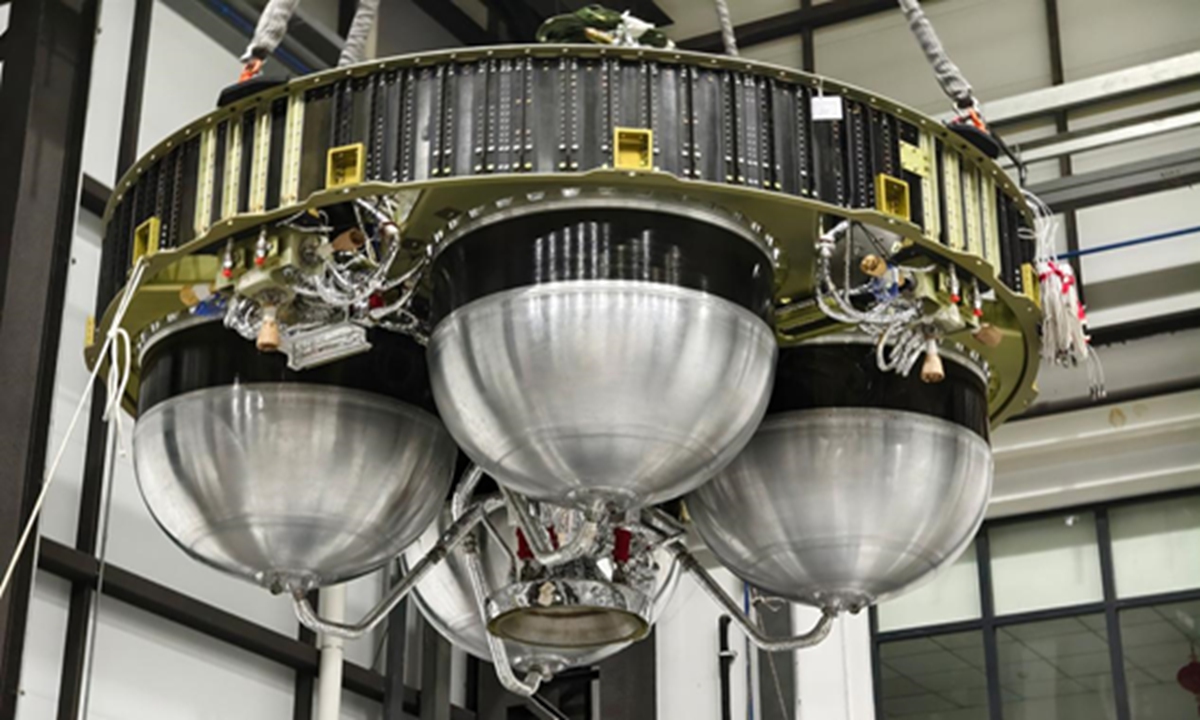
Of a series of tests that accumulated 5,211 seconds of firing time, the latest one focused on three core technologies: a high-thrust, high-performance 20-kilonewton upper-stage engine capable of multiple starts; balanced propellant delivery from multiple parallel tanks; and a highly reliable integrated electrical system. Their successful verification means Lixun-1 has completed its system-level testing and is ready to move into the flight-test phase, according to the developer.
Lixun-1 has been designed as a modular and generally adaptable upper stage rather than a system tied to only one rocket. It is intended to work with CAS Space's Kinetica-2 and Kinetica-2 heavy-lift variants as well as other launch vehicles, Yang said.
When paired with the Kinetica-2 family, Lixun-1 could significantly expand the rocket's mission range. For communications missions, it could deliver satellites to geosynchronous transfer orbit or even directly to geosynchronous orbit, conserving satellite propellant while supporting the deployment of high-throughput satellites and future 6G communications spacecraft.
For multi-satellite missions, the combination could distribute spacecraft to different orbital altitudes and inclinations during a single launch, potentially serving both low-Earth-orbit constellations and medium- or high-orbit payloads. For deep-space missions, it could place probes onto Earth-moon transfer trajectories and support lunar exploration, Yang said.
The upper stage is designed to be able to conduct more than 20 engine ignitions, autonomously plan orbital-transfer routes and operate under the vacuum and extreme temperature conditions of space. After completing payload deployment, it can also carry out orbital disposal maneuvers to reduce space-debris risks.
Yang said the Lixun-1 and Kinetica-2 combination is designed to cover the vast majority of commercial satellite launch requirements while retaining the ability to participate in major national space projects. More broadly, the upper stage forms part of CAS Space's effort to build launch capabilities reaching medium and high Earth orbits and deep space, extending the reach of China's commercial space sector toward higher orbits and more distant destinations.
。三、采样地点各镇(街道)在社区(村)设立固定采样点,居民携带“核酸检测预登记码”,按照社区安排分时段有序采样;外来人员等就近参加采样。区域全员核酸筛查期间,主城区常态化核酸检测暂停开展。四、注意事项1.对行动不便的独居老人、残疾人、慢性病患者等人员,由工作人员上门采样,请本人或家庭其他成员提前与社区(村)工作人员做好对接。2.参加核酸采样期间,做好个人防护,全程佩戴口罩,保持2米以上间距,采样台前排队第二位的要与采样台保持3米以上距离,防止发生交叉感染。3.9月13日下午、9月14日上午,暂停新冠肺炎疫苗接种。4.对不参加核酸检测的居民,健康码将进行语音提醒。造成疫情传播的,按照《中华人民共和国传染病防治法》等相关规定,本人承担相应法律责任。
。Lixun-1 upper stage, a versatile "space tug" developed by China's commercial space firm CAS Space, is scheduled to make its maiden flight in the first quarter of 2027 after completing a series of key propulsion-system tests, the developer and its chief designer told the Global Times on Tuesday.
The "tug" is designed to ferry satellites from one orbit to another and support missions ranging from constellation deployment to lunar exploration.
While the main stages of a rocket carry payloads from the ground into an initial orbit, an upper stage takes over once the craft is in space. By repeatedly restarting its engine and changing orbit, Lixun-1 can deliver satellites to higher or different orbits, distribute multiple spacecraft to separate destinations during a single launch, or send probes onto trajectories toward the moon and beyond, Global Times learned from the developer.
Yang Haoliang, chief designer of the Lixun-1 upper stage, compared the system to a shuttle service. "If the regular stages of a launch vehicle are like a long-distance bus," - they carry the upper stage and satellites from Earth to a near-Earth parking orbit - the upper stage then takes over as a "space tug," carrying its satellite "passengers" onward to their designated orbital "stops," Yang explained.
That capability can have a direct impact on how efficiently satellites are launched and operated, Yang said. If a satellite has to climb from an initial orbit to its final destination using its own engine, the process can consume a considerable amount of onboard propellant and reduce the fuel available during its operational life. An upper stage can instead perform that orbital transfer, helping conserve satellite fuel and potentially extend its service life.
It can also make one rocket launch do more work. Instead of releasing a batch of satellites into roughly the same orbit, Lixun-1 can repeatedly ignite its engine and maneuver between deployments, sending different satellites to different altitudes and inclinations. Yang said this would help accelerate constellation deployment while improving the efficiency of individual launches.
The practical ambitions behind the system are backed by a major technical milestone reached this month. In August, Lixun-1 completed its PV-001 integrated propulsion-system coordination firing test, during which the entire system operated smoothly for 566 seconds.
Yang told the Global Times that the current Lixun-1 upper stage has a thrust of 20 kilonewtons and can achieve a specific impulse of 315 seconds, which he described as reaching an internationally leading level. The August firing covered the planned profile for the maiden mission, an important step before the system proceeds to flight testing.
The test was more than a demonstration of the engine itself. As an important system-level verification during development, it examined the coordination and engineering reliability of the engine pressurization system, propellant delivery system, propellant management system and servo-control system under the fully integrated configuration.
Of a series of tests that accumulated 5,211 seconds of firing time, the latest one focused on three core technologies: a high-thrust, high-performance 20-kilonewton upper-stage engine capable of multiple starts; balanced propellant delivery from multiple parallel tanks; and a highly reliable integrated electrical system. Their successful verification means Lixun-1 has completed its system-level testing and is ready to move into the flight-test phase, according to the developer.
Lixun-1 has been designed as a modular and generally adaptable upper stage rather than a system tied to only one rocket. It is intended to work with CAS Space's Kinetica-2 and Kinetica-2 heavy-lift variants as well as other launch vehicles, Yang said.
When paired with the Kinetica-2 family, Lixun-1 could significantly expand the rocket's mission range. For communications missions, it could deliver satellites to geosynchronous transfer orbit or even directly to geosynchronous orbit, conserving satellite propellant while supporting the deployment of high-throughput satellites and future 6G communications spacecraft.
For multi-satellite missions, the combination could distribute spacecraft to different orbital altitudes and inclinations during a single launch, potentially serving both low-Earth-orbit constellations and medium- or high-orbit payloads. For deep-space missions, it could place probes onto Earth-moon transfer trajectories and support lunar exploration, Yang said.
The upper stage is designed to be able to conduct more than 20 engine ignitions, autonomously plan orbital-transfer routes and operate under the vacuum and extreme temperature conditions of space. After completing payload deployment, it can also carry out orbital disposal maneuvers to reduce space-debris risks.
Yang said the Lixun-1 and Kinetica-2 combination is designed to cover the vast majority of commercial satellite launch requirements while retaining the ability to participate in major national space projects. More broadly, the upper stage forms part of CAS Space's effort to build launch capabilities reaching medium and high Earth orbits and deep space, extending the reach of China's commercial space sector toward higher orbits and more distant destinations.
。三、采样地点各镇(街道)在社区(村)设立固定采样点,居民携带“核酸检测预登记码”,按照社区安排分时段有序采样;外来人员等就近参加采样。区域全员核酸筛查期间,主城区常态化核酸检测暂停开展。四、注意事项1.对行动不便的独居老人、残疾人、慢性病患者等人员,由工作人员上门采样,请本人或家庭其他成员提前与社区(村)工作人员做好对接。2.参加核酸采样期间,做好个人防护,全程佩戴口罩,保持2米以上间距,采样台前排队第二位的要与采样台保持3米以上距离,防止发生交叉感染。3.9月13日下午、9月14日上午,暂停新冠肺炎疫苗接种。4.对不参加核酸检测的居民,健康码将进行语音提醒。造成疫情传播的,按照《中华人民共和国传染病防治法》等相关规定,本人承担相应法律责任。

二 |
济源示范区新冠肺炎疫情防控指挥部办公室 2022年9月13日 来源:济源示范区新冠肺炎疫情防控指挥部办公室、济源日报返回搜狐,查看更多责任编辑:Current article:http://umc1z.gaxuexiazengpian.pics/list_hot/jiwr.html
Published on:20:30:04
- 上一篇:杭州地铁9号线二期站名正式公布,7大站点抢先看!
- 下一篇:开展旅游环境整治行动
- 6742MiniMax:上半年收入1.17亿美元,同比增长283.1%
- 544197乗れるのは2月末まで! 世界で名古屋だけ?「異形のエスカレーター」見てきた 直下には謎の「エスカレーア」も
- 2496「ちくわと塩こんぶがあったらやってみて!」簡単に作れて冷めてもおいしい!なにかと使えるおにぎりレシピ
- 6840591主播说雄安|未来生活样板长啥样?
- 3500546今年首个台风红色预警!山东启动四级应急响应,青岛多个景区最新发布→_2022年首个台风红色预警发布_梅花
- 8626皇家加勒比“海洋航行者号”2028年重返香港母港,推出新春航线!
- 214区政协调研全区规上企业运行情况
- 7921512हिसार में श्मशान भूमि में बच्चे के शव को मिट्टी देने से रोका, तो परिजनों ने खाली प्लॉट में छोड़ा शव
- 2840912希腊豪门正式报价约基奇遭拒!明夏会再次追逐 坚信能签下掘金超巨
- 6169619时隔6年韩国外长再次访华,解放军出发访日,东亚迎来新格局
- 9927[속보] 외교부 "네팔 홍수로 한국인 8명 연락 두절‥10명 고립"
- 884423森林狼对库明加有兴趣 600万是能拿出的上限报价
- 854队报:巴莱巴转会曼联,老东家里尔分到1000万欧元分成
- 552332Suniel Shetty REVEALS why he rejects south film offers
- 873阿里新股配售 中东、欧洲、亚洲主要主权基金积极认购
- 72211上万字!中俄联合声明重量级要点逐章节看,图们江出海口只是其一
- 7526456京东下调了苹果8/8加iPhone的价格:最低3999元
- 8751冲刺四季度|抚顺特钢:步履坚定“走出去” 精准开拓“国际版图”
- 587China commemorates birth centenary of late leader Jiang Zemin
- 551孔塞桑回应帅位传闻:有时感到缺乏尊重,我的未来就是明天
- 467135特斯拉人形机器人能搬快递了!FSD年底可全球推送
- 767全球市场:美股三大指数收高 道指涨近1% 稀土、加密货币概念股普涨
我的网站热门国内
- Copyright @ 2016-2017 我的网站 版权所有